
A field trip checklist for teachers works best in a fixed order: paperwork the week before, vetted chaperones, a bus roster, and a single folder you carry all day. Everything else is detail.
Picture the morning: a bus idling at the curb, a parent asking about a medication, and a missing slip. Most of that is solved days earlier. The steps below sit within the wider picture of classroom life as a teacher, where small systems protect your energy.
Paperwork in the week before the trip
Paperwork is where day-of stress is easiest to remove, because every item can be finished while nothing else is happening. A published field trip checklist groups tasks by timing and starts with the week before, labelled as a minimum. Treat that week as the latest you should be doing these jobs, not the target.

Permission slips
Submit copies of the signed permission slips to the school office. The office then holds a record, so your folder is not the only place a slip exists. Collect slips early enough that gaps show up while there is still time to chase them.
Health office and medication
Notify the health office which students are participating and review medication needs with them. This matters more than it looks, because chaperones may not administer medication to students under the district chaperone guidelines this guide draws on. Settle who handles each student’s medication before you leave, and make sure that person is school staff rather than a parent volunteer.
Volunteer and chaperone forms
Submit the volunteer or chaperone form to the school office for every non-faculty adult attending. Doing this in the same sitting as the slips means one trip to the office instead of several.
The one folder you carry all day
Keep attendance sheets, permission slips and emergency contact information in one organized folder or clipboard, as one field trip packing guide advises. A single folder means that in a stressful moment you are not hunting through a bag.
Build the emergency contact list so there is one contact sheet per student. That makes it easy to pull a single page and hand it to a staff member or paramedic without exposing the whole class’s details.
Charge your phone fully and add a portable charger as backup. Your phone is likely your emergency contact line, so a dead battery is a safety problem, not an inconvenience.
Choosing and clearing chaperones
Chaperones need to be cleared before they are invited onto the roster, so check requirements before you promise a parent a place. The district guidelines above require all chaperones to have completed the Volunteer Training Class and a Mandated Reporter online class. Fingerprints and a background check must be completed before becoming a chaperone. The district also requires a field trip chaperone to be Level 3 and at least 18 years of age.
These are one district’s rules, so your own policy may differ. Ask your office for the local list before you send an invitation. Clearance steps can take a parent time, which is another reason to start early.
Making students identifiable
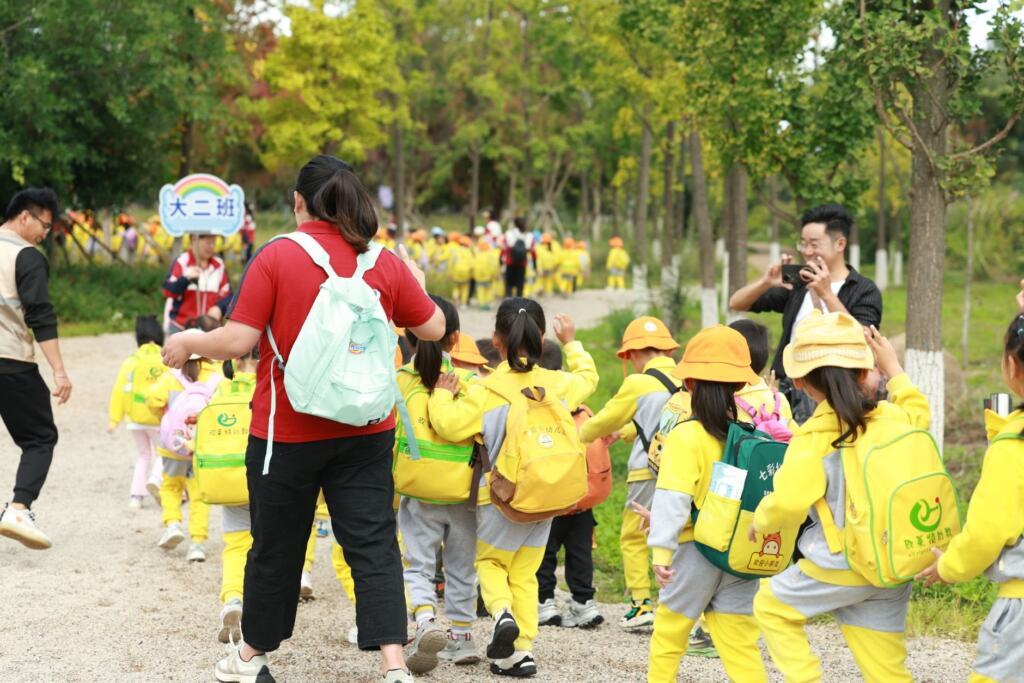
Extra name tags, stickers or wristbands can be a lifesaver in crowded venues, according to the packing guide linked above. They help a staff member at a venue quickly tell which students belong to your group, and they help a student who has wandered to show whom they are with.
Bring spares rather than exactly one per student, since tags get lost or peeled off. Matching clothing serves a similar purpose when your school can arrange it, though it does not replace a name on the student.
Bus, roll and counting
Take roll and count students before leaving school. This is the first of the counts that anchor the day, and the checklist from the travel checklist places it before departure.
Give each chaperone a bus roster with their own students’ names highlighted. A highlighted roster tells every adult exactly which children they answer for. The same checklist has the lead teacher hand out packed bus leader bags to bus leaders before departure, so roles are assigned before anyone boards.
On the vehicle, the district guidelines tell chaperones to keep assigned students with them, including on the bus, and to count them before moving to another location. That rule covers most bus behavior problems: students seated near their own adult are easier to settle. When a group is noisy, use your normal attention getters for the classroom instead of improvising a new signal on the road, and tell chaperones the signal in advance.
Briefing chaperones on conduct
A short briefing before departure removes most ambiguity about who does what. The chaperone guidelines set out the following points worth repeating aloud:
- Discipline stays with staff. Only school staff may assign consequences or use physical restraint. Tell parents their job is supervision and prompt reporting, not correction.
- Report early. Chaperones should report serious or repeated concerns to the teacher promptly, which only works if they know how to reach you.
- Phones for emergencies. Cell phone use is limited to emergencies so chaperones can give assigned students their full attention.
- Photos need a check. Chaperones should check with the teacher before photographing students because some have photo restrictions.
The photo rule is worth stating clearly, since a well-meaning parent may post a picture without thinking. It also links to the broader topic of teacher student boundaries, where social media and personal contact are handled in more depth.
Hand each chaperone a clipboard or folder with the group list and schedule, or a digital copy, as the packing guide suggests.

Who holds what
Use this table to decide who is carrying each document, so nothing sits in a bag nobody remembers packing.
| Item | Held by | When | Planning use |
|---|---|---|---|
| Copies of signed permission slips | School office | Week before the trip | Gives a record outside your own folder |
| Attendance, slips, emergency contacts | Teacher, in one folder or clipboard | All day | One place to look in a crisis |
| Emergency contact sheet | Teacher, one per student | All day | Hand over a single page, not the class set |
| Volunteer or chaperone form | School office, for every non-faculty adult | Before the trip | Confirms each adult is on record |
| Bus roster with names highlighted | Each chaperone | Before boarding | Shows which students an adult answers for |
| Group list and schedule | Chaperones, paper or digital | All day | Keeps adults on the same plan |
| Packed bus leader bags | Bus leaders | Before departure | Assigns bus roles before leaving |
Figures and roles here follow the travel checklist and the packing guide.
Day-of order of operations
If you only have a few minutes, work through this order and skip nothing:
- Confirm signed slips and volunteer forms are at the office.
- Check the health office knows who is attending and has reviewed medication needs.
- Confirm every chaperone has completed their training and clearance.
- Pack your single folder, with contact sheets, and charge your phone.
- Give every chaperone a highlighted bus roster and a group list.
- Hand out name tags or wristbands and the bus leader bags.
- Call roll and confirm every student is accounted for before departure from school.
- Count again before each change of location.
Frequently asked questions
How many chaperones do I need?
Take the ratio from your district’s field trip policy and any rule the venue sets, since neither is fixed by a general checklist. What you can plan for is that every non-faculty adult needs a volunteer form on file, and in the district guidelines used here each chaperone must be Level 3 and at least 18 years of age.
What if a student forgets a permission slip?
Do not let the question first arise at the bus. Because signed slips are meant to be copied to the school office before the trip, a missing slip should be spotted and chased beforehand. Ask your office how your district handles a late slip, and write the answer on your folder.
Do I need walkie-talkies?
They are useful, not essential. A packing guide notes they can be handy for staying in touch with other staff or chaperones in large venues, so use them where your school provides them.
Can a student step away from the group alone?
Under the district chaperone guidelines, a student may not leave the group except in an emergency and with a partner. Make sure every chaperone knows that before the group arrives.