
A Teacher can finish a demanding day and still face planning, messages, and decisions that follow them home. In that setting, self care for teachers can sound like another task on an already crowded list. It works better as a small, repeatable way to protect time for basic needs. Sleep, Exercise, Nutrition, and Mindfulness each have a place, but none can make an unmanageable workload manageable on its own. The useful question is not how much self-care a teacher can fit in. It is which routines remain possible during a difficult week, and which problems need a change beyond personal habits.
What Self-Care Actually Helps Teachers With Burnout?
Self-care can help a teacher notice needs that get pushed aside during the workday. A meal eaten without grading, a walk after dismissal, or a clear stopping point for school messages gives attention to something other than the next demand. These actions need not feel restorative every time to be worth keeping.
It helps to distinguish a routine from a rescue plan. Stress relief during the day addresses the moment in front of a teacher. A self-care routine makes room for needs that return each day. A teacher might keep lunch available, choose a familiar movement option, and set aside a quiet transition before taking up home responsibilities. The routine should be simple enough to survive a week when plans change.
Nutrition belongs in that picture without becoming a project. Bringing food that is practical to eat at work may be more useful than setting a strict rule about what a teacher ought to eat. The same applies to Mindfulness. Pausing to notice tension or taking a few steady breaths can offer a moment to respond deliberately. It does not have to become a formal practice to count as care.
For a teacher who feels depleted, the starting point is the need that has been easiest to neglect. That could be eating while at work, moving after sitting with paperwork, or protecting the evening from work messages. These choices are not a test of discipline. They are ways to make a demanding day less likely to consume every available bit of attention.

Is Self-Care Enough to Fix Burnout?
No. Self-care can support a teacher, but it cannot supply missing support, reduce an assigned workload, or settle expectations that keep changing. Treating those conditions as a personal routine problem places responsibility in the wrong place. A teacher can benefit from an evening boundary and still need changes at work.
Burnout is tied to chronic stress and is work related. Depression is not limited to the work context, and burnout can lead to depression, according to a review in PubMed Central. That distinction matters when exhaustion follows a teacher into life outside school. The teacher does not have to decide alone what a persistent change in mood means. Speaking with a healthcare provider is a reasonable step when concern extends beyond a difficult workday.
The same review describes differing results among studies of individual and organization directed interventions for physician burnout. It cautions that other variables make it difficult to say which approach works. The evidence does not support a simple promise that a personal habit will fix a workplace problem.
A useful boundary separates what the teacher can choose from what requires a wider response. The teacher may decide when to stop checking messages at home. A workload that leaves no realistic time to finish required tasks calls for a discussion about the work itself. Naming that difference is not giving up on self-care. It keeps self-care from becoming another demand.
Burned in Teacher has a separate discussion of teacher burnout for readers trying to understand the larger pattern. When distress at work takes the form of fear or panic, information about teacher anxiety may be more relevant than another routine. Some teachers also consider a career change for teachers. That is a different decision from choosing a walk or a bedtime, and it deserves its own consideration.
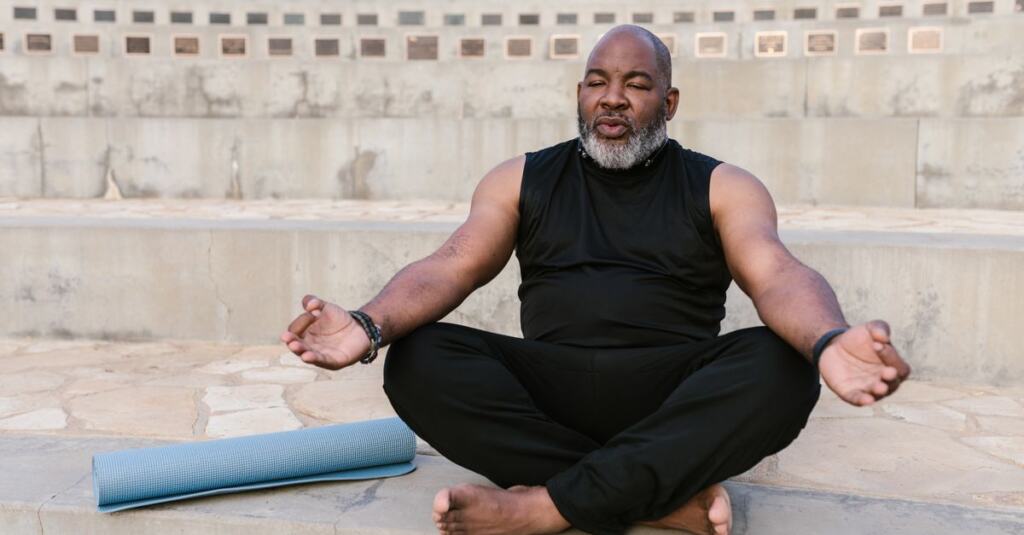
How to Fit Exercise Into a Teaching Day
Exercise is easier to repeat when it does not depend on finding a large empty space in the calendar. A teacher can look for a natural transition, such as the period between leaving work and settling in at home. Walking, stretching, or another preferred form of movement can occupy that transition without requiring the teacher to solve the entire week in advance.
There is a reason to make room for movement, although the evidence has limits. A systematic review in PubMed Central found strong evidence from intervention studies that physical activity reduces exhaustion. Its authors also noted a lack of high quality intervention and longitudinal studies on physical activity and burnout. Exercise is a useful option, not a guaranteed treatment for every teacher.
The most workable plan begins with the schedule a teacher actually has. If a break is unpredictable, a plan that relies on that break may create frustration. A teacher could instead decide where movement fits when work ends, then keep an easier version available for days that run long. The easier version still counts as following the routine. It prevents an all or nothing standard from turning exercise into another source of pressure.
Movement can also mark a boundary. Changing clothes or taking a walk after leaving school may help a teacher shift attention away from unfinished work. The review proposes that regular physical activity helps people detach psychologically from work, which may reduce prolonged stress responses. That proposed explanation should not be mistaken for a promise that movement removes the conditions causing burnout.
A teacher who dislikes a particular activity has no reason to build a routine around it. The practical choice is an activity the teacher can return to without bargaining through every step. When movement is treated as care rather than compensation for a hard day, there is room to adjust it as the school week changes.

What Sleep Routine Helps?
Sleep is often where work quietly takes time from the rest of a teacher’s life. A lesson plan may feel easier to finish at night than to leave unfinished. A sleep routine begins by deciding what work can wait and making the end of the workday visible. Closing materials and putting messages aside can give the evening a clearer boundary.
For adults aged 18 to 60, the recommendation is at least 7 hours of sleep each night, according to the CDC. That guidance is a reason to protect time for sleep, not a reason to judge a teacher whose sleep is disrupted. A routine can create an opportunity to rest, but it cannot force sleep to happen.
A teacher might begin by choosing a repeatable way to wind down. That could mean putting work away, preparing what is needed for the next day, then moving to a quieter activity. The point is to reduce decisions at the end of the evening. If the routine is so elaborate that it becomes another assignment, it is unlikely to serve its purpose.
Quality matters as well as time. The CDC describes quality sleep as uninterrupted and refreshing, and notes that repeated waking is a sign of poor sleep quality. Some health conditions prevent enough quality sleep even though a person’s efforts. A healthcare provider can use tests, including sleep studies, to check for a sleep disorder. Persistent sleep trouble deserves that kind of attention rather than a stricter bedtime rule.
For a teacher, the practical aim is to give sleep a protected place in the schedule while remaining honest about what a routine can control. Exercise, Nutrition, and Mindfulness can be approached with the same restraint. Each offers a way to care for a person doing difficult work. None asks that person to carry the whole burden of fixing the work.